
Most founders pick startup ideas in the worst possible way:
They get a random idea, think "That could work", and just go for it.
That’s why so many of them fail.
So let me show you my exact process to find a profitable startup idea – live on screen, step-by-step. We’ll search for real problems, turn them into opportunities, and check the competition together so you know exactly which ideas are worth your time.
I’m Oskar. I’ve built 2 startups and coached over 50 founders - and this is the same process I use with them.
No fancy words. No fluff.
Just a simple way to find a business that works.
Let’s dive in.
SEE ALL MY FREE STARTUP RESOURCESThey get a random idea, think "That could work", and just go for it.
That’s why so many of them fail.
So let me show you my exact process to find a profitable startup idea – live on screen, step-by-step. We’ll search for real problems, turn them into opportunities, and check the competition together so you know exactly which ideas are worth your time.
I’m Oskar. I’ve built 2 startups and coached over 50 founders - and this is the same process I use with them.
No fancy words. No fluff.
Just a simple way to find a business that works.
Let’s dive in.
Avoid this mistake
Before I show you the process, I need to show you the big mistake you need to avoid.
Most founders start with an idea they think is cool.
They want to build something fancy.
The next AI automation tool.
❌ And then they flop.
Because they forget the most important thing:
❌ People don’t want fancy stuff.
✅ They want their problems solved.
✅ They want a better way to handle their daily work.
So, we don’t build fancy stuff - we want to find things that make people sad, angry, or frustrated. And most of the time, these problems are boring.
But boring is better.
Because boring problems are expensive.
Think about a freelancer who keeps missing deadlines because their calendar is a mess. Or a founder who loses track of which tasks their co-founder is working on because they're using Slack, email, and a Google Doc at the same time.
These are boring problems.
But they are big problems.
People would pay a lot of money for a tool that solves that. So here is the big mindset-shift you need to understand: We are not building a startup based on a cool idea - we look for a problem people have.
And then we build a solution to solve that problem.
------------------------------------------------------------------------
Before I show you the framework to find a profitable startup idea, I have something for you that will help you build a successful startup.
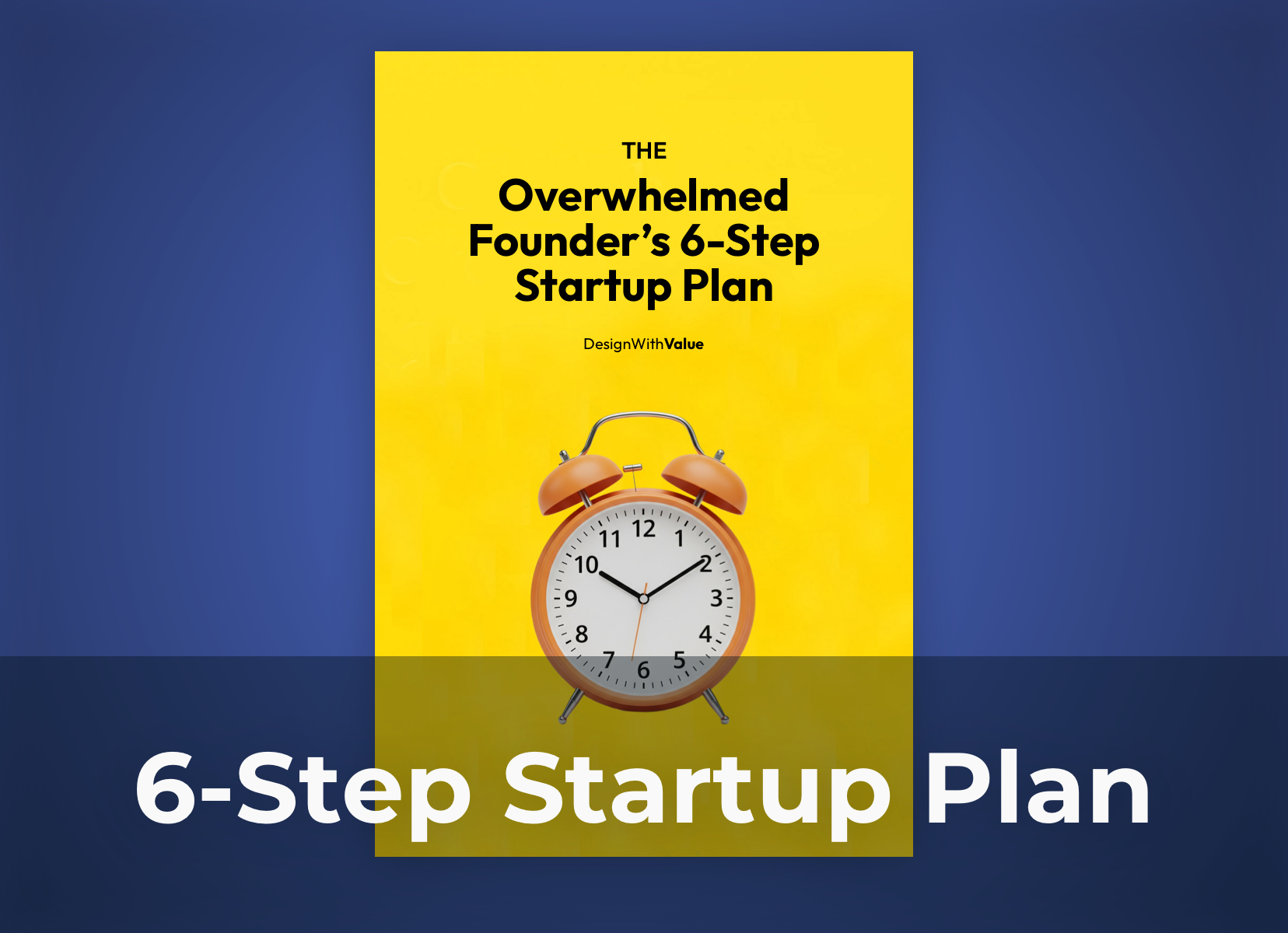
A simple worksheet that shows you exactly what you should focus on in your startup to get results. And what to ignore. It’s my 6-Step Startup Plan.
It will save you months of your time. Download it.
Now let me show you how you can find your profitable startup idea.
Before I show you the framework to find a profitable startup idea, I have something for you that will help you build a successful startup.
A simple worksheet that shows you exactly what you should focus on in your startup to get results. And what to ignore. It’s my 6-Step Startup Plan.
It will save you months of your time. Download it.
Now let me show you how you can find your profitable startup idea.
Step 1: Research on Reddit
Now, let’s get to work.
Open your laptop and go to Reddit.
We are going to find people who are complaining.
❌ Do not search for "Business ideas".
Search for people who are stuck.
Search for:
✅ "I hate it when"
✅ "I am so frustrated with"
✅ "Why is it so hard to"
✅ "Is there a tool for"
For example, type "I am so frustrated with invoicing" into the search bar. You will see people complaining about how long it takes to get paid.
Look for posts where 20 or more people are talking.
We want to see people saying, "I have this exact problem too!".
And we always check the answers and comments as well.
That’s a great way to find problems many people have.
When you do this research, I recommend not picking posts that are too old. Everything within the last 2 years is fine.
You can look at older posts too if you find something really interesting, because later I’ll show you how to make sure people actually want what you build.
Just keep in mind that newer posts are usually more relevant.
Step 2: Capture your ideas in Excel
Once you find a problem people have, you must track it.
Open a simple Excel sheet. Make six columns.
1. The problem:
What is the boring thing that hurts?
2. The proof:
Paste the link to the Reddit post right there.
3. The old way:
How do people fix it now?
4. The money:
Is this a small €10 problem or a big €10K+ problem?
5. Easy to solve?
Can you actually solve it in some way or would this be too expensive?
6. Fulfillment:
Would this be something you want to solve for the next 3–5 years?
Find at least 5 different problems this way and put them into your Excel sheet.
Now, keep this in mind:
Don’t think about solutions yet. For now, we only care about finding problems. Reddit is just one way to find such problems - you can go to Facebook, LinkedIn or any other community group that might be interesting.
Just keep in mind , every time you hear people complaining and saying something like "Man I wish there was" or "Why isn’t there a better way" – you need to listen closely.
Step 3: Market check with Google and ChatGPT
Ok, now you have 5 big problems.
Most people would just pick one and start building.
Don’t do that.
We first do 2 things. Keep in mind you might work on this idea for the next 3–5 years. So, pick something that fulfills you. So, fill out the fulfillment column with either low, medium or high and cut every problem on the list that doesn’t get a high.
When you only have the problems left that you like solving, we check the competition.
Go to Google. Type in the problem you found.
If you see ads for old, ugly tools that cost a lot of money, that is great news!
Wait, what?
Competition is great news?
In this case yes, because it means people are already paying to fix this.
Many founders think if they build something completely new, that’s great.
But in fact, that’s risky. Because there is no proof that people have this problem and want it solved.
So, if you find one or two competitors that aren’t huge, you can keep going. What do I mean with not too huge? Well, if you want to build a chat app and find WhatsApp - I wouldn’t go for it.
If you only find small startups with websites that don't look too professional or you see they are just at the beginning - you can move on.
Next, copy the Reddit comments you saw in ChatGPT and tell it:
"Read these comments. Tell me the things these people are most upset about. Then tell me what kind of simple tool would actually make them happy - and make sure it’s not something that already exists."
ChatGPT will turn those complaints into a clear plan and might give you a powerful solution you can move forward with.
What’s next
Once you’ve done the research and found one real problem to solve, you can move on (and validate your idea). If you didn’t find any, just repeat the process. And if you found multiple good problems, pick the one you’re most excited about.
But this is really just the beginning.
If you’re serious about turning this into a real startup, I put everything I use into my Startup Success Bundle. It’s a clear, proven roadmap - already used by 50+ founders - so you always know what to work on next instead of feeling stuck or overwhelmed.
Click the button below to get instant access.
But this is really just the beginning.
If you’re serious about turning this into a real startup, I put everything I use into my Startup Success Bundle. It’s a clear, proven roadmap - already used by 50+ founders - so you always know what to work on next instead of feeling stuck or overwhelmed.
Click the button below to get instant access.
