
Your startup still has 0 users.
But it’s not because you’re lazy, bad at marketing, or your product is bad.
The real reason is this: Your product might be useful, but it’s not solving one painful problem for one specific group of people.
✅ Right now, people say "Yeah, that’s cool" or "I like the idea."
❌ But nobody thinks "This is exactly for me. I need this now."
And if no one feels that, of course no one signs up.
I’m Oskar. I’ve built 2 startups and coached over 50 founders. Let me show you a simple 3-step process to make the right people think "This is for me."
By the end, you’ll stop second guessing your product because you’ll know exactly who it’s for.
And every decision - features, content, outreach - will get 10x easier.
So let’s get into it.
SEE ALL MY FREE STARTUP RESOURCESBut it’s not because you’re lazy, bad at marketing, or your product is bad.
The real reason is this: Your product might be useful, but it’s not solving one painful problem for one specific group of people.
✅ Right now, people say "Yeah, that’s cool" or "I like the idea."
❌ But nobody thinks "This is exactly for me. I need this now."
And if no one feels that, of course no one signs up.
I’m Oskar. I’ve built 2 startups and coached over 50 founders. Let me show you a simple 3-step process to make the right people think "This is for me."
By the end, you’ll stop second guessing your product because you’ll know exactly who it’s for.
And every decision - features, content, outreach - will get 10x easier.
So let’s get into it.
The "Yeah, That’s Cool" trap
Here’s the trap I see all the time.
A startup founder tells me:
"We help businesses manage their workflow better."
That sounds great, right?
But here is what people really think:
They think, "Yeah… that sounds useful."
And 10 seconds later they forget about it.
Now compare it to this:
We help freelancers with 10+ clients stop missing deadlines and get paid on time - without using spreadsheets.
The first one is: "Sure, whatever."
The second one makes specific people go: "Wait… that’s exactly me."
This is the "Yeah, that’s cool" trap.
If your product sounds "cool" or "interesting" to everyone, no one will say "This is for me".
Here is why this kills your startup:
❌ Nobody thinks "this is for me"
❌ Nobody feels "I need this now"
❌ So, nobody replies, signs up, or pays
The fix is not "do more marketing" or "add more features."
The fix is to get clear on who your product is for and what painful problem you solve. That’s what we’ll do now.
A startup founder tells me:
"We help businesses manage their workflow better."
That sounds great, right?
But here is what people really think:
They think, "Yeah… that sounds useful."
And 10 seconds later they forget about it.
Now compare it to this:
We help freelancers with 10+ clients stop missing deadlines and get paid on time - without using spreadsheets.
The first one is: "Sure, whatever."
The second one makes specific people go: "Wait… that’s exactly me."
This is the "Yeah, that’s cool" trap.
If your product sounds "cool" or "interesting" to everyone, no one will say "This is for me".
Here is why this kills your startup:
❌ Nobody thinks "this is for me"
❌ Nobody feels "I need this now"
❌ So, nobody replies, signs up, or pays
The fix is not "do more marketing" or "add more features."
The fix is to get clear on who your product is for and what painful problem you solve. That’s what we’ll do now.
------------------------------------------------------------------------
Before I show you the framework to fix that, I have something for you that will help you build a successful startup.
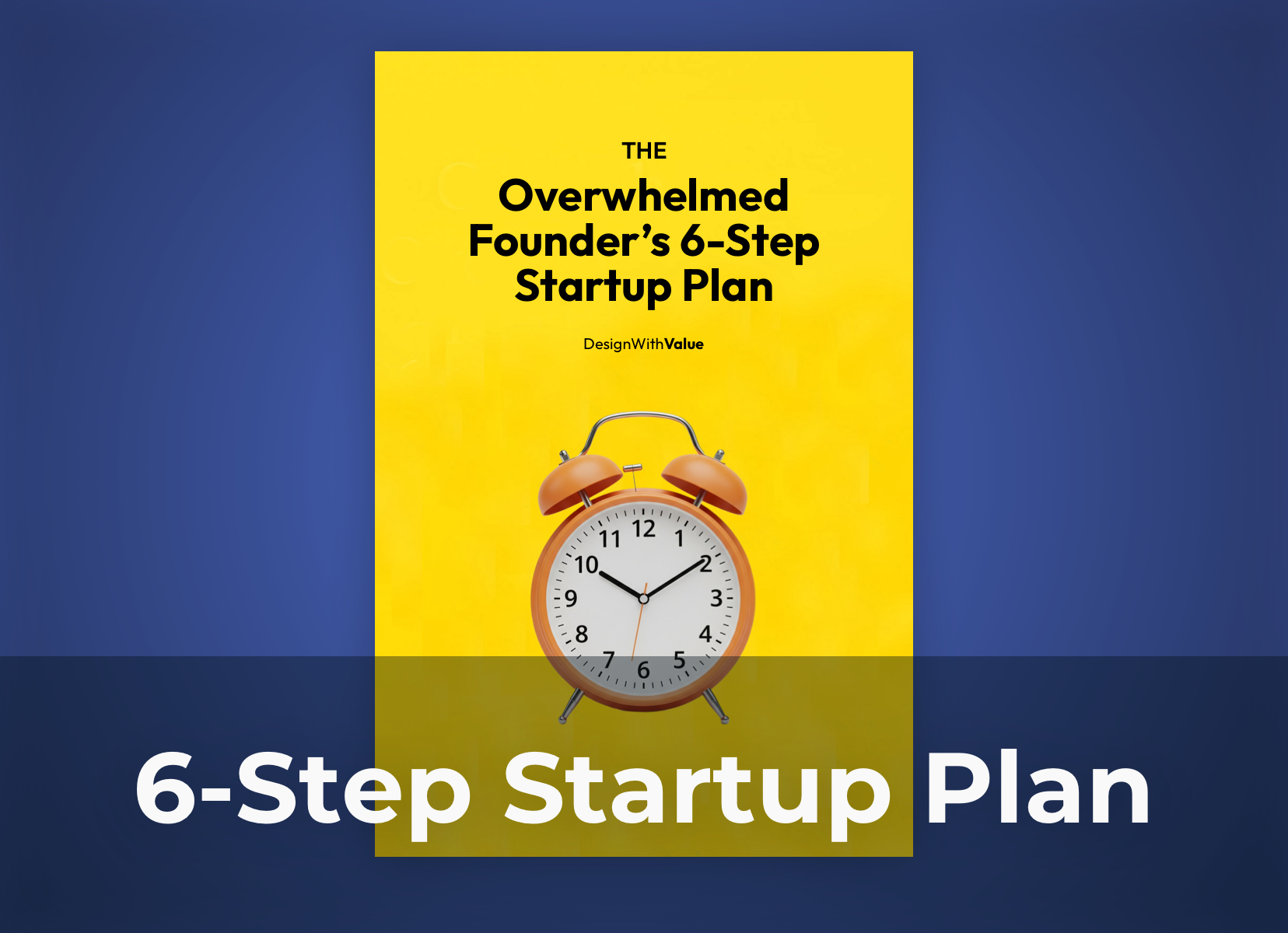
A simple worksheet that shows you exactly what you should focus on in your startup to get results. And what to ignore. It’s my 6-Step Startup Plan.
It will save you months of your time. Download it.
Now let’s fix your positioning so people finally say "This is for me."
Before I show you the framework to fix that, I have something for you that will help you build a successful startup.
A simple worksheet that shows you exactly what you should focus on in your startup to get results. And what to ignore. It’s my 6-Step Startup Plan.
It will save you months of your time. Download it.
Now let’s fix your positioning so people finally say "This is for me."
Step 1: Pick one person with one painful problem
Most founders hate doing this because it feels like they are limiting themselves.
"If I pick one audience, what about all the other people who could buy?"
Here’s what I learned the hard way:
When you try to serve everyone, you end up helping no one.
So, it’s important to focus.
But how do you pick your target audience?
→ Look at who talks to you today.
→ Who replies to your emails?
→ Who DMs you?
→ Who books calls?
→ Who keeps asking questions?
Write down 3–5 real people.
From that list, ask: who has both money and motivation to fix this right now?You want the person who is thinking: "If this problem doesn’t go away, I’m screwed."
Your action this week is simple:
Choose one group to focus on for the next 4–6 weeks.
Remember - you’re not marrying this niche forever.
You’re just committing long enough to get a clear signal.
And once you’ve done that, you can move on to Step 2.
Step 2: Make the problem so specific they nod
Now that you’ve picked your person, Step 2 is to describe their problem so clearly that they literally nod when they hear it.
Use this simple formula:
• Who is it for? (Specific person)
• What is happening in their life or work? (Specific situation)
• What hurts right now? (Specific pain)
For example, if you help people get strong testimonials for their product you could write:
"Founders of B2B tools who know they need video testimonials on their site, but hate begging customers and never get videos that look decent."
✅ Specific person: Founders of B2B tools
✅ Specific situation: Know they should have customer proof
✅ Painful problem: Hate begging for testimonials and never get videos that look decent
So, how do you know if your problem description is good enough?
Use this simple test. Ask:
1. Would someone in that situation say "Yes, that’s me"?
2. Does it make them a bit uncomfortable because it is so true?
3. Could this accidentally describe 10 different types of people?
If it could describe 10 very different people, it is still too vague.
Now here’s what I want you to do:
Write your problem statement using that formula. Don’t try to be clever. Just be accurate. Make sure you name the person, the clear situation, and the painful feeling.
That sentence becomes the foundation for everything:
→ Your website
→ Your emails
→ Your DMs
→ Your content
In step 3 - we tie all together.
POWERFUL STARTUP RESOURCESUse this simple formula:
• Who is it for? (Specific person)
• What is happening in their life or work? (Specific situation)
• What hurts right now? (Specific pain)
For example, if you help people get strong testimonials for their product you could write:
"Founders of B2B tools who know they need video testimonials on their site, but hate begging customers and never get videos that look decent."
✅ Specific person: Founders of B2B tools
✅ Specific situation: Know they should have customer proof
✅ Painful problem: Hate begging for testimonials and never get videos that look decent
So, how do you know if your problem description is good enough?
Use this simple test. Ask:
1. Would someone in that situation say "Yes, that’s me"?
2. Does it make them a bit uncomfortable because it is so true?
3. Could this accidentally describe 10 different types of people?
If it could describe 10 very different people, it is still too vague.
Now here’s what I want you to do:
Write your problem statement using that formula. Don’t try to be clever. Just be accurate. Make sure you name the person, the clear situation, and the painful feeling.
That sentence becomes the foundation for everything:
→ Your website
→ Your emails
→ Your DMs
→ Your content
In step 3 - we tie all together.
Step 3: Craft your positioning statement
In Step 3, you turn everything into one clear positioning statement you can use everywhere.
Here’s the template:
"We help [who] [get what result] by [how you do it]."
For example, a strong positioning would be:
We help non-technical Shopify founders launch a clean, professional store in one afternoon by giving them plug and play page templates instead of forcing them to hire a designer.
Notice what’s happening:
✅ People instantly know if this is for them
✅ They see the outcome
✅ They have a rough idea of how you do it
And here’s a great test to see if your positioning is strong.
Here’s the "coffee shop test":
Imagine you are in a café.
Someone asks "So, what do you do?"
You say your positioning statement.
Within 10 seconds, they should know:
→ "This is me" or
→ "I know someone who needs this."
If they say "Cool!" and then change the topic, your positioning is too vague.
If they lean in and say, "I know this problem" or "That’s exactly my situation" - you’re on the right track.
So this is your action for this week:
Write your positioning statement using the template and put it in three places:
• Your landing page headline
• Your LinkedIn headline or bio
• The first line of your outreach messages or emails
You don’t need to overthink the wording.
Good and specific beats fancy and vague every day of the week.
Here’s the template:
"We help [who] [get what result] by [how you do it]."
For example, a strong positioning would be:
We help non-technical Shopify founders launch a clean, professional store in one afternoon by giving them plug and play page templates instead of forcing them to hire a designer.
Notice what’s happening:
✅ People instantly know if this is for them
✅ They see the outcome
✅ They have a rough idea of how you do it
And here’s a great test to see if your positioning is strong.
Here’s the "coffee shop test":
Imagine you are in a café.
Someone asks "So, what do you do?"
You say your positioning statement.
Within 10 seconds, they should know:
→ "This is me" or
→ "I know someone who needs this."
If they say "Cool!" and then change the topic, your positioning is too vague.
If they lean in and say, "I know this problem" or "That’s exactly my situation" - you’re on the right track.
So this is your action for this week:
Write your positioning statement using the template and put it in three places:
• Your landing page headline
• Your LinkedIn headline or bio
• The first line of your outreach messages or emails
You don’t need to overthink the wording.
Good and specific beats fancy and vague every day of the week.
What’s next
If your startup has 0 users, it’s probably not because your product is bad.
It’s because you’re building it for everyone instead of one specific person.
• So pick one narrow audience with one urgent pain.
• Describe their situation so clearly they nod.
• And turn that into a simple positioning statement and put it everywhere.
Once you do this, you stop doing random stuff. You know exactly who your product is for and what problem you solve. Then everything becomes clearer.
But hey, if you’re serious about building a successful startup, check out my Startup Success Bundle.
It gives you a clear, proven roadmap (already used by 50+ founders) so you always know what to work on next – instead of feeling stuck or overwhelmed.
Click the button below to get instant access.
It’s because you’re building it for everyone instead of one specific person.
• So pick one narrow audience with one urgent pain.
• Describe their situation so clearly they nod.
• And turn that into a simple positioning statement and put it everywhere.
Once you do this, you stop doing random stuff. You know exactly who your product is for and what problem you solve. Then everything becomes clearer.
But hey, if you’re serious about building a successful startup, check out my Startup Success Bundle.
It gives you a clear, proven roadmap (already used by 50+ founders) so you always know what to work on next – instead of feeling stuck or overwhelmed.
Click the button below to get instant access.
