
If you’re looking for a clear Lean Startup tutorial with a step-by-step action plan, this is for you.
In the next few minutes, I’m going to show you exactly how the Lean Startup method works and how you can apply it directly to your startup.
You’ll get a practical plan with concrete action steps and one clear success metric for each stage, so you always know how to make progress.
I’m Oskar. I’ve built 2 startups and coached over 50 founders through this process.
Let’s dive into the action plan.
SEE ALL MY STARTUP RESOURCESIn the next few minutes, I’m going to show you exactly how the Lean Startup method works and how you can apply it directly to your startup.
You’ll get a practical plan with concrete action steps and one clear success metric for each stage, so you always know how to make progress.
I’m Oskar. I’ve built 2 startups and coached over 50 founders through this process.
Let’s dive into the action plan.
What is a Lean Startup
Most people overcomplicate Lean Startup.
Here's what it actually is.
Lean Startup means this:
→ Build something small
→ Measure what people actually do
→ Learn from the data
→ Repeat
That's it.
❌ What many founders actually do instead is something like this:
They build their product
They hope somebody buys
They wait
And then they panic
They keep adding features, hoping users will magically show up.
But they never do. That’s why so many startups fail.
Instead, the lean startup approach shows you what really works.
Now let me show you the five stages.
Stage 1 - Clarify what you do
The first stage is about being brutally honest about what you are actually doing. Most founders can’t clearly explain their product.
They say things like:
❌ We’re helping businesses be more efficient.
❌ We’re an AI tool for teams.
❌ We’re a productivity platform.
Those sound nice, but they’re meaningless.
Because it’s too vague.
So, here’s what I want you to do.
Write one simple sentence:
"We believe [customer type] with [problem] will pay for [solution]."
For example:
"We believe small B2B teams wasting hours on spreadsheet project management will pay for a simple workflow tool."
This is your bet. We are going to test that later.
Next, pick ONE target audience. Not three.
❌ Not ‘startups, freelancers, and small businesses.’
✅ One clear group.
At this stage, you need to be super focused. Once you have your hypothesis and your target audience, you’re ready for stage two.
They say things like:
❌ We’re helping businesses be more efficient.
❌ We’re an AI tool for teams.
❌ We’re a productivity platform.
Those sound nice, but they’re meaningless.
Because it’s too vague.
So, here’s what I want you to do.
Write one simple sentence:
"We believe [customer type] with [problem] will pay for [solution]."
For example:
"We believe small B2B teams wasting hours on spreadsheet project management will pay for a simple workflow tool."
This is your bet. We are going to test that later.
Next, pick ONE target audience. Not three.
❌ Not ‘startups, freelancers, and small businesses.’
✅ One clear group.
At this stage, you need to be super focused. Once you have your hypothesis and your target audience, you’re ready for stage two.
------------------------------------------------------------------------
Before we move on to stage 2 - I have something that will make your next few months in your startup 10x easier.
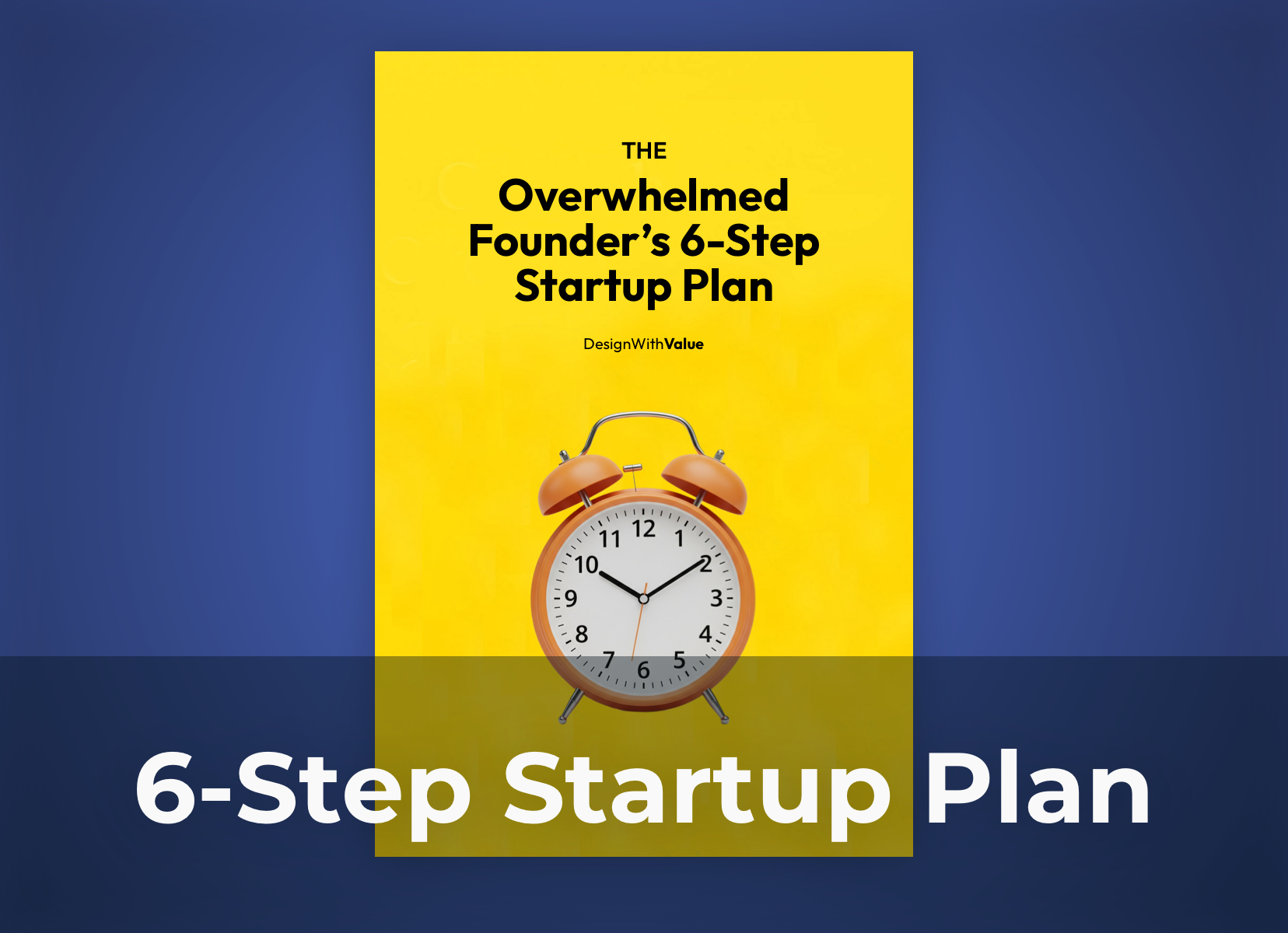
It’s a simple worksheet that shows you exactly what to focus on next - and what to ignore. My 6-Step Startup Plan.
It helps you stop doing random stuff, pick the right next moves, and see real progress in a few weeks. You can download it for free.
Now let’s move on to stage 2.
Before we move on to stage 2 - I have something that will make your next few months in your startup 10x easier.
It’s a simple worksheet that shows you exactly what to focus on next - and what to ignore. My 6-Step Startup Plan.
It helps you stop doing random stuff, pick the right next moves, and see real progress in a few weeks. You can download it for free.
Now let’s move on to stage 2.
Stage 2 - Talk to real customers
Stage two is about talking to real people.
❌ Not online surveys
❌ Not Twitter polls
❌ Not feedback from friends
✅ Real potential customers
The goal here is to find out if the problem you are solving is actually painful for them.
Hop on Zoom, on the phone, or talk in person with those people and ask them the following questions:
→ How are you handling this problem today?
→ What have you tried before?
→ What frustrates you about it?
→ What happens when this problem is not solved?
You want to understand their world.
Notice what we are not asking. We are not asking:
→ Would you use my product?
→ Do you like this idea?
→ Would you pay for this?
These questions are useless.
Because people will almost always say yes, just to be nice.
Your job is to run 5 of those interviews - 30 min each.
So, here’s what usually happens after those interviews – you end up in one of three spots:
1. Either the problem is clearly painful = you move to stage three.
2. The problem is annoying but not urgent = do a few more interviews.
3. People just don't care = That's a win because you just saved yourself months of building something nobody wants.
Stage 3 - Test your MVP in the wild
Stage three is where you finally put something in front of people and see what they actually do - not what they say.
But first, decide how people will interact with your MVP.
That could be:
• A landing page with a signup form
• A demo call
• Or a simple prototype walkthrough
Pick ONE format. Then design one small experiment around it.
Remember the lean startup approach.
For example something as simple as:
"I’ll send traffic to a landing page and see how many people book a call."
That’s it.
❌ No complex funnel
❌ No five-step onboarding
❌ No automation process
Now you choose one success metric.
Maybe it’s:
• Ten percent of visitors book a call or
• Five percent of visitors run a 7 day trial
Just one number that tells you if it’s working.
Once you have your test and your success metric ready, you move on to stage 4.
Stage 4 - Measure and decide
Stage four is where many founders make one big mistake:
❌ They collect data and then do nothing with it.
So the goal here is simple:
Use the data from stage three to make real decisions.
You look at the numbers you defined earlier and check if you should double down or tweak something.
For example, if you get no traffic and no replies, you have a distribution problem. In that case, test a different marketing channel – maybe small communities instead of cold email, or direct outreach instead of just LinkedIn posts.
Now, let’s say you are getting traffic. People are visiting your site. But they’re not signing up. That’s a positioning problem. People don’t really get why it’s for them, or why it’s better than what they already use.
So instead of adding features, you might rewrite your landing page. You might change your headline. You might focus it on one specific use case instead of five.
At the end of this stage, write one clear sentence about what you’ll test next and why.
For example: "Next, we will focus on product managers at small SaaS companies and improve our copy, since they are not currently signing up."
Stage 5 - Iterate with a system
Now comes an important part many founders miss.
❌ You need to avoid turning your startup into random experiments.
✅ Instead of changing ten things at once, you focus on one area.
You might say:
"For the next 3 weeks, I’m only testing my landing page."
Each week, you define one experiment that follows from your last decision.
That might look like this:
1. I’ll test a new headline.
2. I’ll test a new subheadline.
3. I’ll test a different call to action.
Over time, you build a short list of upcoming experiments.
Usually two or three. Each one has a clear goal and a clear metric.
If something is not connected to that list, you don’t do it.
That’s how you stay focused and grow your business over time.
What’s next
Now you know how to build a lean startup.
But the hard part usually isn’t understanding this stuff - it’s knowing how to apply it week by week without second-guessing yourself.
When I was building my own startups, I kept wishing for a simple roadmap that told me exactly what to focus on next at each stage.
That’s why I put everything I use into my Startup Success Bundle.
It’s a clear, proven roadmap already used by 50+ founders to help you build your startup without feeling stuck or overwhelmed.
Click the button below to get instant access.
But the hard part usually isn’t understanding this stuff - it’s knowing how to apply it week by week without second-guessing yourself.
When I was building my own startups, I kept wishing for a simple roadmap that told me exactly what to focus on next at each stage.
That’s why I put everything I use into my Startup Success Bundle.
It’s a clear, proven roadmap already used by 50+ founders to help you build your startup without feeling stuck or overwhelmed.
Click the button below to get instant access.
